
 +377 97 97 79 29
 info@miells.com
 14 avenue de la Costa, 98000 Monaco
In Monaco, buying, selling, or renting a property often represents a major financial commitment and relies above all on a relationship of trust between the client and the agent. It is therefore essential for individuals to ensure that their interlocutor is a duly authorised professional.
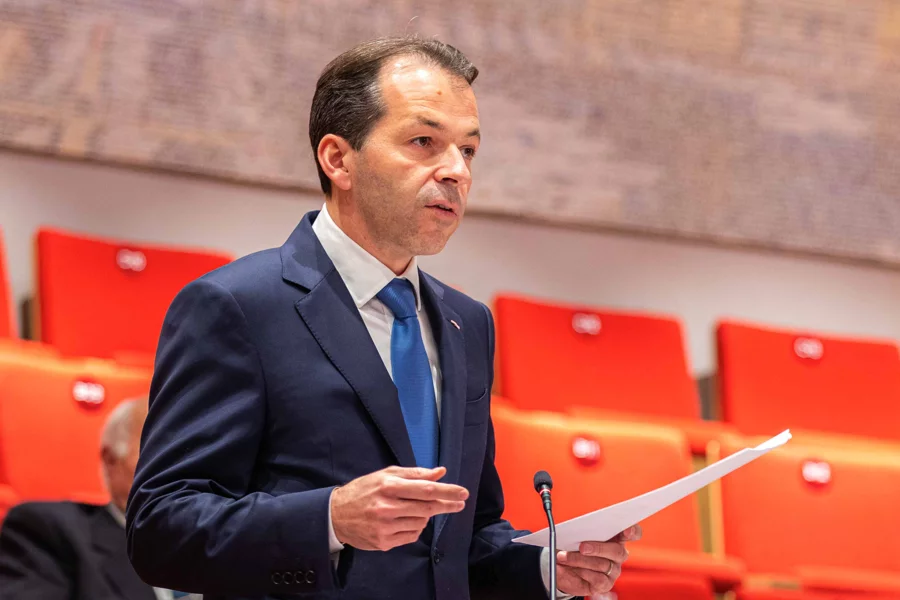
Adopted by the National Council on October 2, 2025, law proposal No. 271 aims to address this gap. Introduced by Nicolas Croesi, National Councillor and real estate negotiator at Miells-Christie’s International Real Estate, its objective is clear: to modernise the legal framework governing real estate professions in order to strengthen transparency, professionalism, and security in transactions. The text has now been transmitted to the Government, which may either transform it into a draft law or interrupt the legislative procedure.
At Miells-Christie’s International Real Estate, this development fully aligns with the philosophy we have always upheld: providing rigorous support delivered by experienced experts capable of ensuring each client a smooth, secure transaction that meets the highest standards of the Monaco real estate market.
Modernising the Framework of Real Estate Professions
The adopted text stems from a simple observation: the rules that have governed the profession until now are more than twenty years old. Yet the Monaco real estate market has evolved considerably. Transaction structures have become more complex, regulatory requirements have increased (anti-money laundering, compliance, administrative obligations), and client expectations are higher than ever.
In this context, Law No. 1.252 of 2002 was no longer sufficient to guarantee transparency in professional practices. Some actors were able to operate without real supervision, making it difficult for the public to distinguish between an authorised professional and an unlicensed intermediary.
Law proposal No. 271 therefore provides a concrete response: clarifying who may operate, under what conditions, and with what guarantees. Its goal is to protect clients and raise the professional standards of the sector while preserving the image of excellence and rigour that underpins the Principality’s international reputation.

Stricter Requirements for Practising Real Estate in Monaco
One of the main contributions of the reform concerns the administrative authorisation procedure for real estate professionals.
Indeed, the law proposal stipulates that any person wishing to manage or administer a new entity must:
• Reside effectively in the Principality, ensuring a genuine local presence and proximity to clients and institutions;
• Hold at least 25% of the capital of the company they manage, guaranteeing real economic involvement and direct managerial responsibility;
• Have clearly identified professional premises, as home-based activity will be prohibited (although temporary installation in a business centre will remain authorised during the first two years).
These conditions aim to strengthen the credibility and traceability of market participants, preventing the creation of short-lived or disconnected structures lacking integration in the local economic fabric.
A Professional Licence and Mandatory Training
Another key change is the creation of a professional licence issued by the Monaco administration.
This licence, valid for five years, will officially identify those authorised to carry out real estate or business asset transactions. It will include the holder’s name, authorised activities, and the name of the agency or branch. Only licence holders (as well as agency managers and directors) will be legally allowed to operate.
In the event of cessation or modification of activity, the licence must be returned or updated without delay.
The law proposal also introduces a continuing education requirement:
• Each professional must complete training at least once every five years;
• New entrants must complete training within one year of starting their first position, unless justified otherwise based on their experience.
These training sessions, supervised by the Monaco Real Estate Chamber, will ensure that professionals maintain up-to-date knowledge in related areas such as real estate law, co-ownership, urban planning, and anti-money laundering regulations.

Mandates, Commissions and Advertising: A Welcome Clarification
Law proposal No. 271 also strengthens the framework governing the relationship between clients and agents.
From now on, every professional must hold a written mandate, either paper or electronic, before negotiating, committing, or representing a client. This time-limited mandate formalises the relationship and prohibits any payment of commission before the transaction is officially concluded.
Regarding property management, agents will now be required to report to clients at least once per year, ensuring greater transparency in the management of entrusted properties.
The proposal also specifies that commissions may only be paid to authorised professionals, in order to prevent unlicensed intermediaries and illegal practices. This measure protects both buyers and sellers while enhancing the reputation of agencies recognised for their professionalism and compliance.
Finally, an important point concerns real estate advertising. Any person not authorised to operate in the Principality of Monaco will now be prohibited from publishing property listings, whether in print or online. Only licensed professionals or property owners themselves will be allowed to do so.
The objective is clear: to prevent false listings, unfair competition, or confusion regarding the status of intermediaries, particularly on online platforms and social networks.
Clearer Sanctions to Regulate the Profession
To ensure the effectiveness of the system, the law proposal introduces a new regime of administrative and criminal sanctions.
Offences such as illegal practice, absence of mandate, unauthorised advertising, or improper collection of fees would be punishable by fines ranging from €9,000 to €90,000, with a maximum potentially equal to the profit gained.
These measures aim to maintain a healthy and transparent market while protecting legitimate professionals who comply with the rules.
Transparency, Trust and Excellence: The Pillars of Monaco’s Real Estate Future
By modernising the framework governing real estate professions, law proposal No. 271 paves the way for a more transparent and secure market for both residents and investors. This initiative reflects the Principality’s commitment to preserving its image of excellence while adapting its regulations to the evolving realities of the sector.
At Miells-Christie’s, we see this reform as another step toward a practice that is ever more demanding, based on trust, expertise, and integrity.
Note: This article is for informational purposes only and does not constitute legal advice. For any questions regarding the practical application of these provisions to your situation, please consult a qualified advisor.